Bankruptcy Law Marketing · US / Canada / UK

Digital Marketing for Bankruptcy Lawyers

Sign More Cases at Lower Lead Costs

Bankruptcy law attracts searchers already in financial distress — they compare multiple firms in a single session and decide within 48 hours of first contact. Legal digital marketing for this practice area works only when built around that decision speed, not around impression counts or monthly traffic reports.

No obligation. We respond within one business day.

Written by Sara Linden Lead Digital Strategist, LeadGulls · 11 years in legal marketing across three jurisdictions
Updated June 2026
Digital marketing for bankruptcy lawyers built around signed cases

Certified across the platforms bankruptcy clients search on

Google
Google Partner
Meta
Meta Business Partner
Microsoft
Microsoft Advertising Partner
Pinterest
Pinterest Partner
TikTok
TikTok Ads Partner
𝕏
X Ads Partner
Klaviyo
Klaviyo Partner
ChatGPT
ChatGPT Partner
SEMrush
SEMrush Certified
Bankruptcy lawyer meeting with a client

Your Next Client Decided in 48 Hours.
Your Marketing Needs to Match That Speed.

Bankruptcy prospects don't wait. Firms that connect marketing to same-day intake workflows sign more cases from the same budget.

Why LeadGulls

Agencies Report on Traffic. We're Accountable to Your Signed Case Count.

The most common agency problem we see in bankruptcy law accounts isn't bad ads — it's misaligned success metrics. Firms receive monthly reports showing growing click volume while their actual signed client numbers remain flat. Those reports are accurate and completely useless at the same time.

Bankruptcy law has the shortest decision-to-contact window in legal search. Prospects researching Chapter 7 or Chapter 13 options typically contact a firm within 24–72 hours of their first search. Every element of your marketing system — ad copy, landing page, form, and intake response — must be calibrated to that window. We build and measure each layer against one number: signed retainers per month.

We've inherited bankruptcy accounts where a firm's Google Ads were sending Chapter 7 search traffic to a generic "practice areas" page. Conversion rate: under 2%. Chapter-specific pages with intake-matched copy in the same market regularly reach 6–9%. Same budget. Different architecture.

What Converts in Bankruptcy Law

Chapter-specific landing pages 6–9% CVR
Generic practice area pages 1.8–3.2% CVR
Response within 15 minutes 3–4× intake rate
Response within 24 hours Baseline only
AI Overview–eligible content Growing channel
Quick Answer Digital marketing for bankruptcy lawyers refers to the coordinated use of SEO, Google Ads, and conversion-focused web strategy to generate signed client inquiries from people actively researching Chapter 7, Chapter 13, or consumer debt relief options. It differs from general legal marketing in that bankruptcy prospects are high-urgency, low-trust buyers who compare several firms in the same search session — making response speed and intake clarity more determinative than ad spend volume.

What We Build

Five Channels. Each Measured Against Signed Retainers.

Bankruptcy law marketing works across search, content, and AI channels — but only when each is built for the chapter-specific buyer, not for a general legal audience.

Chapter-Segmented Google Ads

Chapter 7 and Chapter 13 searches represent fundamentally different buyer profiles — different financial thresholds, different emotional states, different objections. Separate campaign structures, landing pages, and ad copy for each chapter type produce measurably better conversion economics than consolidated campaigns. Most templated builds miss this entirely.

  • Separate ad groups and landing pages per chapter type
  • Means-test intent keywords isolated from filing-intent keywords
  • Call extension scheduling matched to intake availability

Bankruptcy Law SEO

Organic search for bankruptcy terms compounds faster than most practice areas because competitor content is thin and rarely chapter-specific. A structured bankruptcy law SEO program targeting Chapter 7 eligibility queries, means test calculators, and local "near me" terms typically produces first-page visibility in 90–120 days in mid-size markets — not the 12-month timelines common in more competitive verticals.

  • Chapter-specific content architecture (C7, C13, C11 where applicable)
  • Local SEO for metro and county-level searches
  • Technical audit and Core Web Vitals compliance

AI Overview & ChatGPT Visibility

AI-powered search now surfaces bankruptcy firm recommendations directly inside ChatGPT and Google's AI Overviews — without a click to your website. Structured FAQ content, entity-clear service descriptions, and schema-marked attorney profiles are what determine whether your firm appears in these surfaces. Most bankruptcy firm sites have none of the three.

  • FAQ schema optimized for AI Overview eligibility
  • Entity-clear service page structure for LLM training signal
  • Attorney and firm entity markup across all major directories

Intake-Optimized Landing Pages

The landing page is where bankruptcy marketing either pays off or doesn't. A page that speaks to Chapter 7 eligibility concerns, addresses the means test question upfront, and presents a low-friction intake path converts at three to four times the rate of a general contact page. We build and test these per chapter type and per traffic source.

  • Chapter-specific page copy, reviewed for ABA and provincial compliance
  • Multi-step form design tested for completion rate improvement
  • Page speed optimized — bankruptcy prospects abandon slow pages fast

Intake Speed Integration

Marketing that generates a lead and delivers it to a 24-hour email inbox produces a fraction of the signed cases that the same lead volume would generate with a 15-minute response system. We connect campaign tracking to your intake workflow — whether that's a CRM, a call routing setup, or a live chat system — so response speed becomes a measurable part of your marketing ROI.

  • Dynamic call tracking per campaign source
  • CRM integration for lead response time measurement
  • Lead source attribution through to signed retainer

Multi-Market Campaign Management

Bankruptcy law varies significantly by jurisdiction — US federal bankruptcy code governs filing, but Canadian consumer proposals and UK individual voluntary arrangements (IVAs) are entirely different instruments with different search behavior and different competitive landscapes. We manage jurisdiction-specific campaigns rather than applying a single template across markets.

  • US: Chapter 7, 13, and 11 market segmentation by metro
  • Canada: Consumer proposal and personal bankruptcy keyword targeting
  • UK: IVA, debt relief order, and bankruptcy petition search campaigns
Digital strategy session for a law firm

Chapter-Specific. Intake-Connected. Measured on Signed Retainers.

Not every bankruptcy search is the same buyer. Building campaigns that reflect that difference is where the conversion gap closes.

Get Free Audit

How We Work

Audit First. Architecture Second. Traffic Third.

Every engagement starts with a read of what you currently have — not a generic onboarding questionnaire. Bankruptcy practices often have existing Google Ads accounts or websites with content that simply isn't converting. We diagnose before we build.

The single most common finding in bankruptcy law audits: chapter-type traffic landing on a single generic page. Fixing that one structural issue consistently produces the largest early gains. Everything after that is refinement.

1

Marketing System Audit

We review existing campaigns, website conversion paths, intake workflow, and — if shared — signed case data by source. Findings documented before any recommendation.

2

Chapter-Type Architecture Build

Separate campaign structures, landing pages, and content frameworks built per chapter type and per jurisdiction. Not adapted from a template. Built for your market.

3

Intake Workflow Connection

Call tracking, form attribution, and CRM connection go live before campaigns run. Response speed measurement is built in from day one — not added later.

4

Traffic & Conversion Calibration

First 60 days: conservative spend while conversion data accumulates. Chapter-specific landing pages A/B tested against each other, not against generic pages.

5

Monthly Retainer Attribution Review

You receive a report connecting ad spend and organic traffic to consultation bookings and, where your intake system allows, signed retainers. Clicks not reported as a primary metric.

See exactly where your current marketing is losing signed cases — before you spend another dollar.

Get Free Audit

Proof of Accountability

You Get Reports That Connect to Your Revenue. Not to Our Dashboard.

Transparency is a structural choice, not a feature we add on request. Every client receives a monthly report built around their actual intake numbers. We do not present click or impression data as evidence of campaign health.

According to the Legal Marketing Association's 2025 benchmarks, law firms that track marketing spend to signed case outcomes — rather than to website metrics — report 40% higher satisfaction with agency relationships and make better channel allocation decisions. Plain accounting. Nothing proprietary.

  • Monthly signed retainer attribution report
  • Consultation booking volume by campaign source
  • Cost-per-signed-case by chapter type and market
  • Intake response time tracking against conversion rate
  • Quarterly competitive landscape review by metro market
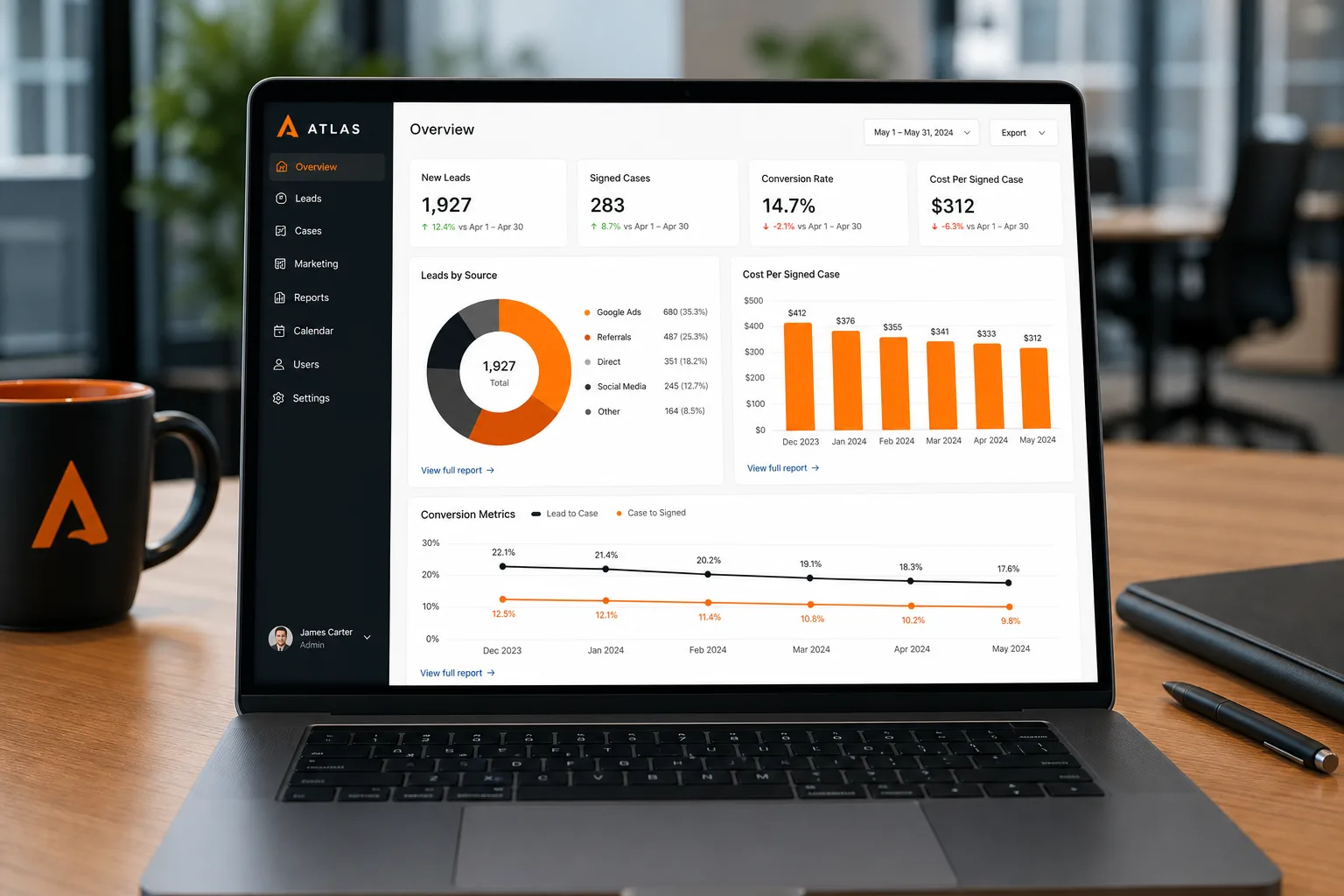
LeadGulls client reporting dashboard showing signed case attribution

Every metric in our reporting connects to a business outcome — not a platform vanity number. Clients see the same data we see, explained in plain language.

Bankruptcy attorney intake consultation

Signed. Not Submitted. Not Clicked.

The only number that matters in bankruptcy law marketing is retained clients per month. Every other metric is a leading indicator — not a result.

Common Questions

What Bankruptcy Lawyers Ask Before Getting Started

How is marketing for bankruptcy law different from other legal practice areas?

Bankruptcy prospects have the shortest decision window in legal search — typically 24–72 hours from first query to intake contact. Personal injury clients take days to weeks; immigration clients take two to four weeks. Bankruptcy searchers are financially distressed, comparing multiple firms in the same session, and highly responsive to intake speed. A firm that responds to a web inquiry within 15 minutes converts that prospect at three to four times the rate of a firm that responds the next business day — regardless of marketing quality.

Chapter type also matters in a way that has no equivalent in most other practice areas. Chapter 7 and Chapter 13 searchers are at different financial thresholds, have different concerns, and respond to different copy. Marketing that treats them as one audience consistently underperforms.

What does Google Ads cost for bankruptcy lawyers, and is it worth it?

A modest monthly budget generates meaningful click volume in bankruptcy law — the economics become unfavorable only when chapter-specific traffic lands on generic pages, which suppresses conversion rates to the 1.8–3.2% range. Chapter-specific landing pages with intake-matched copy consistently achieve 6–9% conversion rates. The channel is viable — the architecture determines whether it is.

Chapter-specific landing pages with intake-matched copy in the same markets consistently achieve 6–9% conversion rates. The channel is viable — the architecture determines whether it is.

How does AI search (ChatGPT, Google AI Overviews) affect bankruptcy law marketing?

AI-powered search surfaces bankruptcy firm recommendations directly inside ChatGPT conversations and Google's AI Overview panels — often without the user clicking through to a website. The firms that appear in these surfaces share three characteristics: structured FAQ content that directly answers common bankruptcy questions, entity-clear attorney and firm profiles with consistent NAP data across directories, and schema markup that signals service type, jurisdiction, and specialty clearly.

Most bankruptcy firm websites currently lack all three. This is an early-mover window — the firms that optimize for AI Overview eligibility now are building a visibility advantage that will compound as AI search share grows. Google's Search Central documentation confirms that speakable schema and FAQ schema are among the primary signals used for AI Overview content selection.

We've used agencies before and seen no results. Why would this be different?

The most common agency failure pattern in bankruptcy law: campaigns built correctly on the ad side, delivering traffic to pages that weren't built for conversion. The agency reports rising click volume and improving CTR — both accurate — while your intake team sees flat inquiry numbers. The disconnect is structural, not a performance issue that optimizing bids will fix.

The second pattern: no connection between the marketing system and intake workflow. Leads arrive and sit in an email inbox for hours. By the time someone follows up, the prospect has signed with another firm. We audit both the campaign structure and the intake path before making any recommendations. You see the diagnosis in writing before we propose anything.

Advertising Compliance

Four Jurisdictions. Different Rules. All Covered.

Bankruptcy law advertising sits at the intersection of federal bankruptcy rules and regional professional conduct standards. Copy that performs in one market may be non-compliant in another.

United States

US bankruptcy law advertising operates under ABA Model Rules of Professional Conduct — specifically Rules 7.1 through 7.3 — as adopted (often with modifications) by each state bar. Claims about case outcomes, fee structures, and attorney characterizations must be carefully framed. States like New York and California have additional requirements around disclaimers and the use of the word "specialist."

Federal bankruptcy code (11 U.S.C. § 110) also imposes disclosure requirements on any "debt relief agency," which includes attorneys advertising bankruptcy services. These disclosures must appear in specific advertising contexts and are distinct from state bar advertising rules.

Canada

Canadian bankruptcy legal advertising is governed provincially by law society rules rather than a single national standard. The Law Society of Ontario, the Law Society of BC, and the Barreau du Québec each maintain distinct advertising guidelines — with Quebec's French-language requirements adding an additional layer for firms serving that market. Comparative advertising and outcome-based claims face stricter restrictions in several provinces than in US counterparts.

Consumer insolvency advertising in Canada must also distinguish clearly between Licensed Insolvency Trustees and legal counsel — a distinction that affects keyword strategy and landing page copy in ways that US campaigns do not need to account for.

United Kingdom

UK bankruptcy and insolvency legal advertising falls under Solicitors Regulation Authority (SRA) Code of Conduct requirements, which prohibit misleading marketing and require that any claims about outcomes or service quality be substantiated. The SRA's 2019 transparency rules additionally require published price information for certain insolvency services — a requirement that interacts directly with landing page design.

UK campaigns must also account for the Advertising Standards Authority (ASA) CAP Code, which governs digital advertising claims independently of SRA rules. Campaigns running across both Google Ads and Meta in the UK face compliance review under both frameworks simultaneously.

Cross-Jurisdiction Campaigns

Firms serving clients across multiple markets — common for immigration-adjacent insolvency practices and international businesses — require geo-segmented campaign architectures with jurisdiction-specific copy variants. Running a single ad set across US, Canadian, and UK markets produces compliance exposure in at least one jurisdiction regardless of how the copy is written.

LeadGulls manages compliance review as part of campaign setup — not as an add-on service. Copy for each market is reviewed against the applicable professional conduct rules before campaigns go live. We flag compliance questions and recommend review by local bar counsel when a claim sits in a grey area.

Free Audit · No Obligation

Find Out What Your Current Marketing Is Actually Producing

Share read-only access to your Google Ads account and your website. We'll identify the chapter-type architecture gaps, intake workflow disconnects, and conversion path issues — and deliver a written report within five business days.

Book Your Free Audit →

No contract to start. No setup fees on the audit. Managed services cancel with 30 days' notice.

From the Founder

Why Most Law Firm Marketing Produces Reports — Not Retained Clients

Our CEO sat down to talk through the exact patterns that keep well-funded law firm marketing programs from translating into signed cases. Chapter-type segmentation, intake speed as a conversion variable, and why click reports are the wrong success metric — covered in one conversation.

If you're evaluating whether to rebuild your digital marketing or simply want a sharper frame for what good looks like in legal PPC, this episode is a direct window into how we think.

LeadGulls Founder & CEO Legal Marketing Podcast · Available on Spotify
Listen on Spotify
Book Your Free Marketing Audit →