Establish access
Access comes first. We find indexation gaps, rendering issues, redirects, duplicate routes, missing canonicals and blocked content that stop a good page from being considered.
LeadGulls is an AI SEO agency for roofers. Turn your roofing company into the obvious local choice when a homeowner asks Google, ChatGPT or Gemini who to hire. We make the service, location and evidence behind your business easy to verify, then measure what changes.It is roofing SEO built for how homeowners research a contractor now.
Roofing-specific scope: services, service areas, storm questions and the inspection journey — not generic content.
Search-first: technical access and useful information before speculative AI shortcuts.
No placement promise: we improve the conditions for discovery. No one controls an assistant’s recommendation.
A quick snapshot for readers — and for the answer engines that quote them. Every statement below is expanded, with evidence and sources, further down the page.
Bottom line: if a page cannot be crawled, understood and verified, no amount of “AI optimisation” will help it.
There is no fixed timeline for an AI mention, and we do not promise one. We report verifiable changes first — indexed service pages, corrected business facts, complete answers — then track a documented set of representative AI-search observations over time.
Four checks, in order: whether the right pages can be crawled and indexed; whether your business facts agree across the website and local listings; which homeowner question each service page answers; and an ordered list of issues labelled as technical blockers, content gaps or unproven hypotheses.
Pricing starts at $2,500 USD a month. The final scope depends on the number of service areas, the condition of the site and how much implementation you want us to handle. A free consultation sets the scope before any quote.
Roof repair and roof replacement contractors in Canada or the United States with a live website, defined service areas and real proof a homeowner can check — licences, reviews, project photos. It is not a fit for anyone who wants a guaranteed AI mention.
AI SEO for roofers helps a roofing company become a source that search engines, Google’s AI Overviews and AI Mode, and assistants such as ChatGPT can find, understand, verify and quote. It is the same discipline as technical and local SEO, applied to a search environment where answers are generated rather than listed.
On a roofing site, that means four things: crawlable service and location pages; one consistent business entity (a single, unambiguous record of your name, services, service areas and contact details); pages that answer one homeowner question completely; and evidence a stranger can check.
It does not mean buying a mention, publishing thin pages at scale, or promising that ChatGPT will name you. Google states that there are no additional technical requirements to appear in its AI features beyond ordinary Search eligibility.
Closest adjacent service: search engine optimization for roofing professionals.
Access, clarity, answers, evidence. We follow the path a search system takes before it can responsibly surface a local roofing company, and fix the weak link first.
Access comes first. We find indexation gaps, rendering issues, redirects, duplicate routes, missing canonicals and blocked content that stop a good page from being considered.
One company, one record. We connect your company, trade specialties, service areas, locations and customer path with accurate on-page information and structured data where it fits.
Answer one question completely. We turn vague pages into useful service explanations: roof type, condition, urgency, process, scope and local constraints.
Read the contractor AI-search playbook →Measure the change, not the screenshot. We track organic evidence and a repeatable set of AI-search observations, then use the gaps to make the site more useful.
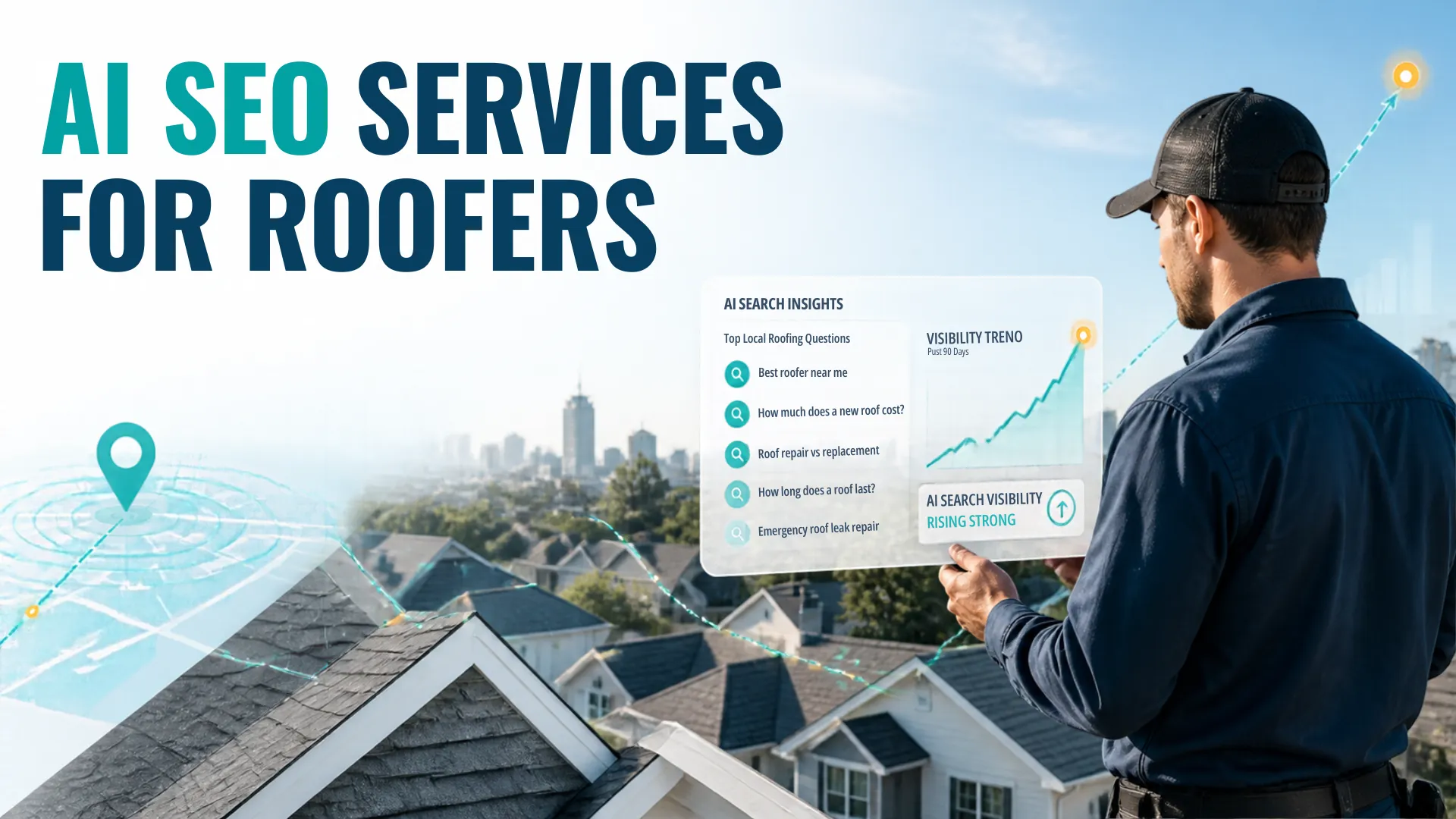
The mix depends on three things: your service-area footprint, the state of the existing site, and the evidence your business can already show. This is the practical scope behind an AI-search programme. For the lead-side implication, see our guide to high-intent roofing leads from AI SEO.
Access comes first. We inspect the pages that should carry commercial and local intent, then remove the barriers that stop a crawler or a homeowner from reaching the complete answer.
Facts must agree everywhere. Roofing companies lose trust when the name, service area or phone number differs between the site, the Google Business Profile and directories. We align those facts.
Answer the pre-call question. We make service pages state what is wrong, what happens next, whether you cover the area, and how an inspection works.
Show proof a stranger can check. We identify where a claim needs support and organise the evidence your business can honestly publish — real projects, qualifications, process detail and third-party validation.
Markup clarifies meaning. We use Schema.org structured data to describe the page and business accurately where it is eligible. It is not a citation lever.
Observations are not rankings. We build a stable question set around your market, document what appears, and use it as a diagnostic alongside Search Console and lead data.
AI search is one route into the same pipeline, not a replacement for demand capture. When the commercial goal is immediate enquiry volume while the site is being repaired, the paid counterpart is ChatGPT ads for roofers.
We keep the two programmes measured separately, because AI-search observations and paid cost per booked inspection are not the same kind of number. Where paid search already carries the load, we work alongside roofing PPC rather than against it.
Two short lists, so you can self-qualify before a call.
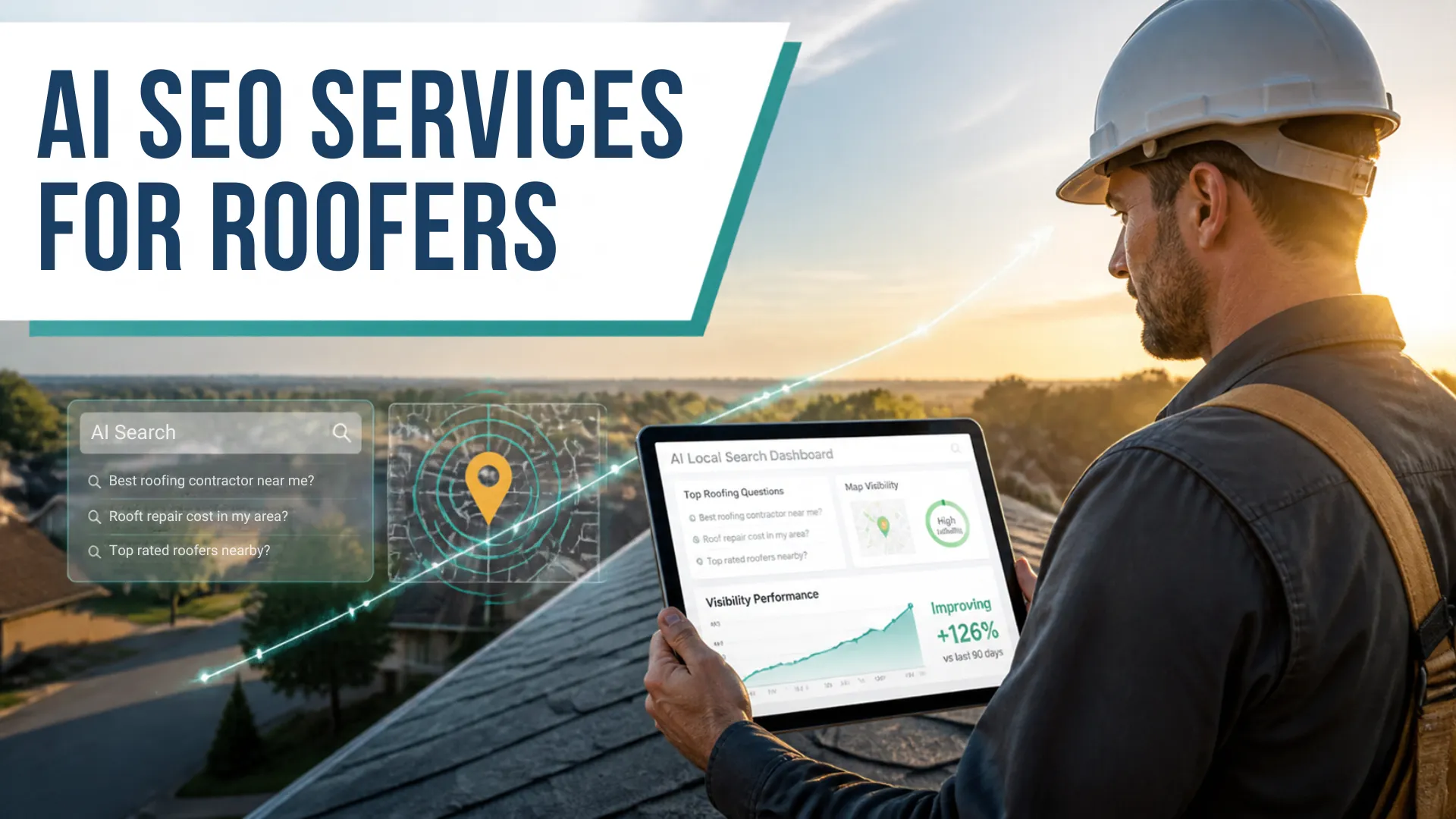
A page cannot be used if it cannot be reached. It cannot be understood if the business, location or service is ambiguous. It cannot be quoted if every claim sounds interchangeable.
Google’s own guidance is explicit: a page must be indexed and eligible for a snippet, and there are no additional technical requirements for AI Overviews or AI Mode. That is why a responsible AI SEO audit for roofers starts with the site and the business reality behind it — not an llms.txt file, bulk AI copy or a promise to “rank in ChatGPT.” The same questions are unpacked in our guide to how a roofing business appears in ChatGPT search results.
Scope comes after evidence. We label each issue as a technical blocker, a content gap, an unproven hypothesis or something outside the site entirely.

One foundation, several surfaces. Each product has different interfaces, sources and behaviour. We strengthen what they share, then observe the differences honestly rather than claiming a universal formula.
Search eligibility first. Helpful content, page experience and accurate local business information.
Technical SEO, service pages, local optimisation and discoverable proof.
Questions vary. Results depend on user and context, and may use web search, citations or no explicit links.
Clear entity information, useful web pages and an observation set around real homeowner questions.
Sources shift. Selection changes with the prompt, freshness and supporting evidence.
Useful, attributable pages; publication hygiene; earned third-party support where appropriate.
The decision is still local. Homeowners compare Maps, reviews, company sites, phone calls and estimates.
Local search, conversion paths, proof and the wider roofing marketing system.
ChatGPT SEO services for roofers are the part of this programme aimed squarely at conversational research: pages that answer a complete question, business facts an assistant can attribute to a named company, and an observation set built from the questions homeowners in your market actually type. The mechanics are documented in how a roofing business appears in ChatGPT search results.
The substitution problem — being cited without being named — is covered separately in what makes ChatGPT recommend a roofing company.
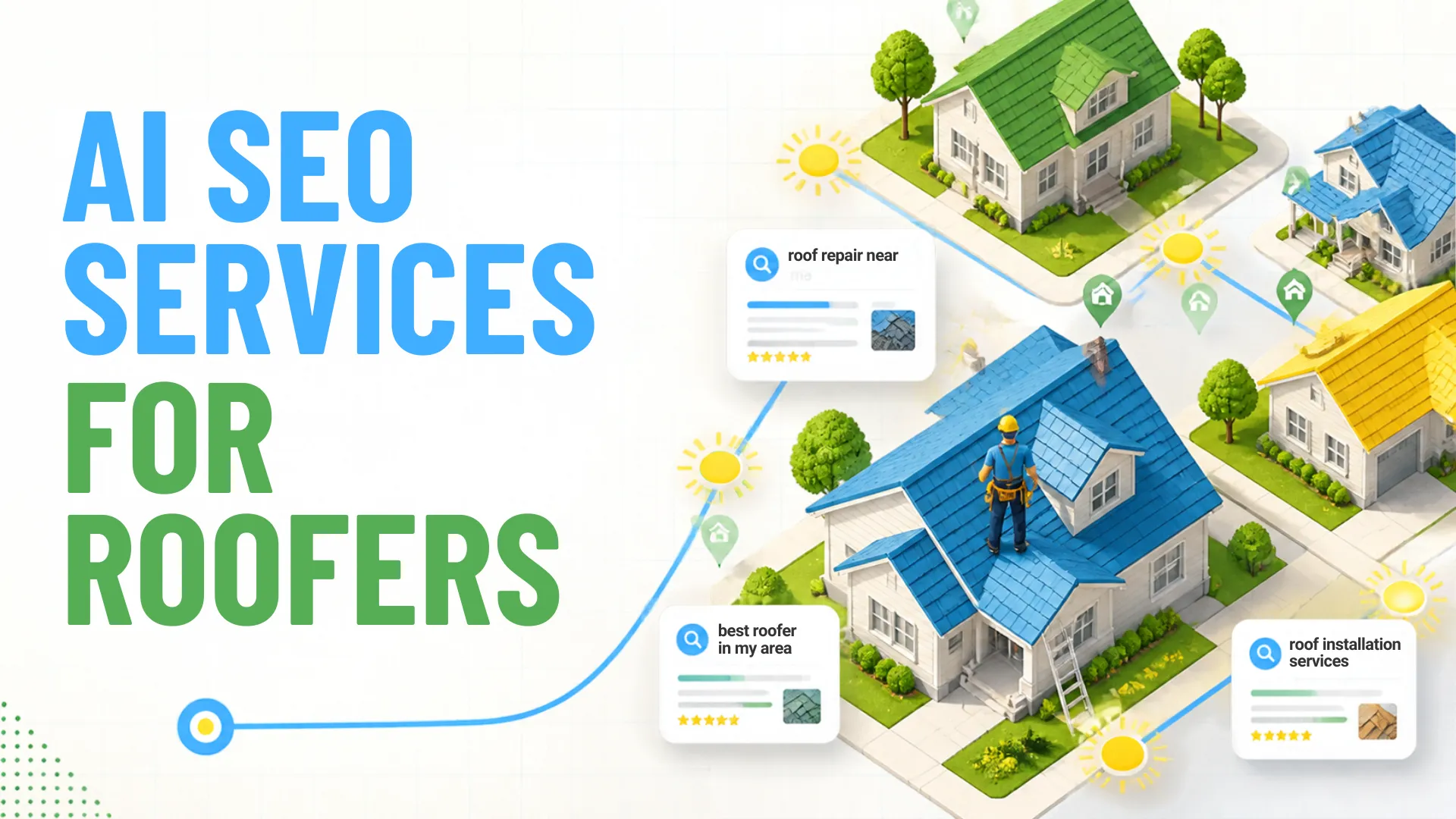
These are question shapes, not keyword lists. We group them by intent and write them the way a homeowner writes them. They are representative patterns, not measured search volumes — and no phrasing guarantees a mention.
Read this as a content map: each cluster needs one page that answers it completely, with your service area named in the first screen. How those pages actually earn a citation is unpacked in the ChatGPT citation playbook for roofers.
Short answer: it is almost never a penalty, and rarely about a model “preferring” anyone. Answer systems name the businesses they can attribute with confidence, quote without ambiguity and verify somewhere else. Five causes cover most cases.
One entity, one set of facts. A system has to tie a name, a service, a place and a phone number to a single business entity. If your business details disagree between your website, your Google Business Profile and the directories, you are expensive to name — so a cleaner competitor gets named instead.
Answer the question, not the company history. “Family-owned since 1998” is not an answer to “who fixes a leaking flat roof in Markham this week.” Pages built around the homeowner’s question get quoted; pages about the company get skipped.
Third-party evidence beats self-description. Reviews, association listings, local coverage, manufacturer certifications and licence records. Systems lean on what someone other than you has said, because it is safer to repeat.
Specificity is usable. Service boundaries, roof types, exclusions, warranty terms, timelines and cost ranges. A vague page gives the system nothing concrete to pass on to the homeowner.
Sometimes you are not in the source set. The assistant may be drawing on pages that do not include your site at all — blocked crawlers, unindexed pages, or a market where you are simply not covered yet. That is an inclusion problem, not a copywriting problem.
Work in that order: access, attribution, answers, evidence. Fixing those removes the reasons a system has to skip you. What it looked like on a live programme is in the LeadGulls AI SEO case study.

We can diagnose, implement and measure. Better access, stronger service information, clearer local signals and evidence help both conventional and AI-mediated research.
Every recommendation has a reason. Your roadmap states why a page is being improved, the homeowner question it resolves and how success will be evaluated.
Results vary by prompt, place, product and user context. Any agency selling a fixed AI placement is claiming control it does not have.
No fake reviews, awards, locations or citations. Durable visibility needs information customers can trust.
Good SEO work should make decisions simpler. Our starting process creates a shared record of what is true now, what needs to change and what would count as evidence of progress. Every engagement is scoped as AI SEO services for roofers first: the deliverables follow the audit, not a fixed monthly package.
What you want more of. We learn which roof systems, service areas and job types your team wants more of — plus capacity, seasonality and the difference between a call and a qualified inspection.
What is true now. We map the current information architecture, technical access, local presence and the questions that lead a homeowner toward or away from your business.
An ordered programme. You receive blockers first, then high-value service and location work, then supporting evidence and durable content. Each item has a reason and an owner.
Implementation and review. We implement with your team, check the live result and review signals over time. The programme adapts to findings, not a fixed list of monthly SEO chores.

The final scope is set after the audit. It depends on the number of service areas, the condition of the site and how much implementation you want us to handle. A free consultation sets the scope before any quote.
Ahmet Dogan hosts the LeadGulls digital marketing podcast, where roofing SEO and AI search are discussed at the level of mechanics rather than slogans. Two episodes are the natural companion to this page: one on ranking inside Google AI Overviews, Gemini and ChatGPT, and one on where advanced SEO for roofers goes next. Both are free and both are on Spotify.
How answer surfaces select and name a roofing company, and what a site has to get right before any of that is possible.
Where roofing search is heading, why the fundamentals still carry the result, and what to stop spending on.
Full episode notes, transcripts and the rest of the series live in the LeadGulls digital marketing podcast library.
No acronym appears without a definition. Every term below is spelled out at first use elsewhere on this page. Hover over an abbreviation to see its full name.
We link to primary sources, not SEO blogs. These are the documents behind the technical statements above. All are non-commercial and free to read.
Why it matters: Google says a page must be indexed and eligible for a snippet, and that there are “no additional technical requirements” for AI Overviews or AI Mode. This is the basis for our “no special file” position.
Why it matters: the official standard for pages that answer a question completely, instead of repeating claims.
Why it matters: the list of markup types actually eligible for rich results — the reason we treat schema as clarity, not a citation lever.
Why it matters: the vocabulary behind the
LocalBusiness, Service and
FAQPage entities in this page’s structured
data.
Why it matters: concrete page-experience thresholds at the 75th percentile: LCP ≤ 2.5 s, INP ≤ 200 ms, CLS ≤ 0.1. These are the numbers we use instead of vague “faster site” claims.
Why it matters: the standards body behind the semantic HTML that makes this page readable without JavaScript.

AI search changes quickly. These are the limits and mechanics that matter when choosing a partner for your roofing company. Four short commercial answers are in Quick answers near the top; every technical term is in the glossary.
AI SEO for roofers is the work of making a roofing company’s service information accessible, clear and verifiable for search systems that generate answers. It includes technical SEO, local business consistency, useful service pages, original evidence and measurement. It does not guarantee a mention or recommendation from an AI product.
No. AI-search results vary by question, location, context and the system’s source selection. A responsible agency can improve the conditions for discovery and track representative queries, but cannot guarantee an AI recommendation.
No. No special schema or file is a prerequisite for Google AI features. Schema can clarify page entities and support eligible rich-result features, but it is not a citation lever. We use it for accurate structure, not as a promise of AI visibility.
Practical work, not a trick. For roofing companies, the useful work is: audit what can be accessed and understood, improve service and location information, strengthen independently verifiable business signals, create genuinely useful content, and monitor how representative questions resolve over time.
Five signals, kept separate. We look at technical eligibility, indexed service-page coverage, local business consistency, traditional search performance and a documented set of representative AI-search observations. An observation is a direction signal, not a ranking position or a guarantee.
The foundations are the same: crawlable pages, accurate local information, useful service content and a clear route to a call. The difference is emphasis. AI-mediated research rewards pages that answer one question completely, state where you work and what you do not do, and can be verified by a third party. So the work leans harder on entity clarity, question coverage, evidence and observation of generated results — while still depending on ordinary search foundations.
Much of it, yes. Technical access, service-page quality and business-information accuracy are within reach of a competent web team or a marketing coordinator working from a checklist. Agencies add capacity, a repeatable audit method and a measurement routine that is hard to sustain internally. If you fix only one thing in-house, fix the pages a homeowner reads in the ten minutes before they call.
GEO stands for generative engine optimization. It is a newer name for work aimed at assistants such as ChatGPT. For roofers the practical tasks are the same: crawlable pages, one consistent business entity, complete answers and checkable evidence. Every term on this page is defined in the plain-language glossary.
Start with evidence, not a promise. Get a clear view of the access, clarity and proof gaps affecting your roofing company’s visibility — then decide what is worth fixing first.
Request an AI SEO audit